
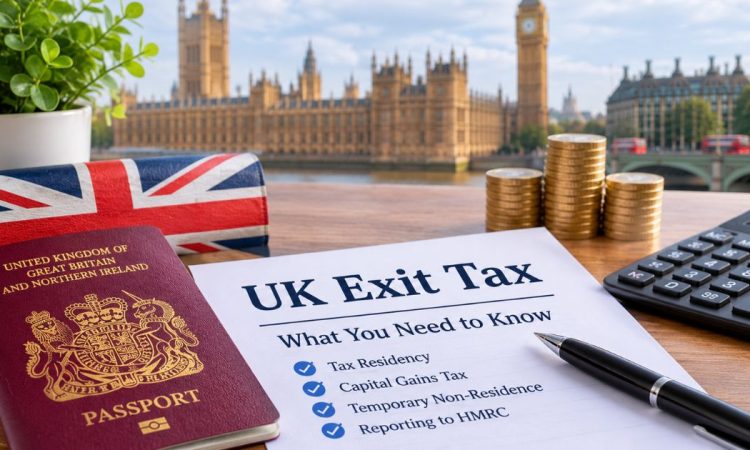

Does the UK have an exit tax? Not at the time of writing. Britain has no general charge on people who simply move abroad. Yet the phrase keeps appearing in headlines, and it confuses many readers.
The confusion is understandable. In late 2025, reports suggested the Chancellor was weighing a 20% levy on wealthy leavers. Ministers later dropped the idea. Even so, several existing rules can tax you when you emigrate. This guide explains what the UK exit tax debate was about, which real rules still apply, and how to plan sensibly if you are thinking about leaving. Whether you are an employee, a landlord or a business owner, the details matter.
Does the UK Have an Exit Tax Today?
No. As of November 2026, the UK has no general exit tax. HMRC does not charge a levy simply because you stop being a UK resident.
An exit tax, sometimes called a departure charge or settling-up charge, taxes unrealised gains when someone leaves a country. Unrealised means the asset has risen in value, but you have not sold it. Several countries use this approach. Britain has never adopted a broad version.
That does not make leaving tax free. Some existing rules can still reach your assets, income and estate after you go. We cover them below.
What Was the Proposed UK Exit Tax?
In autumn 2025, newspapers reported that the Treasury was considering a 20% charge on the business assets of wealthy people leaving the UK. Think tanks and economists had urged something similar for months, arguing it could slow the flow of high earners abroad.
The backlash was fast. A Startup Coalition letter, signed by more than 150 founders and investors, warned that an exit tax would tell entrepreneurs to leave early or not come at all. Within days, reports said the Chancellor, Rachel Reeves, had ruled the idea out.
The Budget on 26 November 2025 did not include it. A Treasury spokesperson said the department does not comment on tax speculation outside fiscal events. So the proposal is shelved rather than gone for good, and nothing is confirmed for the future.
Why Did the Idea of a UK Exit Tax Appear?
Two things drove it. First, the government replaced the old non dom regime with a residence-based system from April 2025. Some wealthy individuals reacted by reviewing whether to stay. Estimates of how many left vary widely, and the figures are disputed, so treat headline numbers with care.
Second, the Treasury needs revenue. An exit charge looked like a way to raise money without raising everyday taxes. Critics countered that it could cost more than it raised if people left early. That risk featured heavily in the backlash.
Which Taxes Can Still Apply When You Leave the UK?
Even without a formal exit tax, four areas deserve attention.
Capital gains tax and the five year rule
Once you become non resident, you generally stop paying UK capital gains tax (CGT) on assets held overseas. The temporary non-residence rules can change that. If you return within five years, certain gains made while abroad on assets you owned before leaving can be taxed in the year you come back. For example, a shareholder who sells a stake from abroad and returns after three years may face a UK bill.
UK property
UK land and buildings stay inside the UK tax net. Non residents pay CGT on gains from UK residential and commercial property. Rental profits from UK property also remain taxable here, so you may still need to file a Self Assessment return.
Inheritance tax after you leave
Since April 2025, inheritance tax (IHT) depends on long-term UK residence, not domicile. Broadly, if you were resident for at least 10 of the previous 20 tax years, your worldwide assets can stay within IHT after you leave. This tail lasts between three and 10 years, depending on how long you lived here. Arguably, it is the closest thing to a UK exit tax that exists today.
Company exit charges
Companies are treated differently. If a UK company moves its tax residence abroad, HMRC can treat its assets as sold at market value. That triggers a corporation tax charge on the gains. It is a genuine exit charge, though it applies to companies rather than individuals. Business owners who plan to move a company abroad should take advice early, because valuing the assets can be complex.
How Does the UK Compare With Other Countries?
Some commentators describe the UK as an outlier among developed economies. Canada, France, Germany and the United States all run some form of exit or expatriation tax, though the rules differ widely. Some apply only above set asset thresholds. Others offer ways to defer payment.
Britain relies on narrower tools instead: the five year rule, UK property taxes and the IHT tail. Supporters of a wider charge say it would protect tax revenue. Opponents say it punishes success and could push people to leave before it starts. Both sides have a point, and the evidence on how people respond remains debated.
Who Would a UK Exit Tax Affect?
Based on the 2025 reports, the target was wealthy individuals and company founders with large unrealised gains. Employees, pensioners and families moving abroad for work were not the focus.
A future version could look different. Three questions would matter most:
- Which assets: UK assets only, or worldwide holdings
- What threshold: a high value, or a much lower one
- How payment works: immediately, or spread over several years
Here is a simple illustration, not a real case. Imagine a founder whose shares cost £1 million and are now worth £5 million. The unrealised gain is £4 million. A 20% charge would mean £800,000, due before any sale. That cash flow problem is a key concern for founders.
Until those details exist, claims about who would pay are guesswork.
Is Leaving Early to Avoid an Exit Tax Sensible?
Tax advisers quoted in the press during the 2025 debate warned against hasty departures. Their reasoning is sound. Moving country is a big step with many costs beyond tax.
You would need to meet the residence tests, which turn on days spent here and your ties to the UK. You may also become taxable somewhere else, and that country’s rules may differ. Family, schooling, healthcare and work all deserve weight too.
A move made to avoid a tax that does not exist could leave you worse off. Plan around the law as it stands.
What Should You Do If You Plan to Leave the UK?
Rumours should not drive big financial decisions. Practical preparation helps far more:
- Check your residence status using the Statutory Residence Test on GOV.UK.
- Keep records of purchase dates, costs and valuations for major assets.
- Tell HMRC you are leaving, using form P85.
- Ask about split-year treatment, which divides the tax year into UK and overseas parts.
- Review UK pensions and bank accounts, and tell providers your new address.
- Speak to a qualified tax adviser before selling assets or moving.
- Rely on official GOV.UK announcements, not social media posts.
Timing matters as well. Selling an asset a few weeks earlier or later can change which country taxes the gain, so plan before you act.
Frequently Asked Questions
Is there an exit tax in the UK?
No. The UK has no general exit tax as of November 2026. However, capital gains tax on UK property, the temporary non-residence rules and the inheritance tax tail can still apply after you leave.
Did Rachel Reeves introduce an exit tax?
No. Reports in November 2025 said the Chancellor dropped a proposed 20% charge on wealthy leavers. The Budget on 26 November 2025 did not contain an exit tax.
Do I pay tax if I leave the UK permanently?
You may still owe UK tax on UK income and UK property gains. Long-term residents may also face inheritance tax for several years. Most overseas gains fall outside UK CGT, subject to the five year rule.
Could the UK introduce an exit tax in future?
It is possible. Any Chancellor could propose one at a future fiscal event. At present, none is confirmed, so check GOV.UK and HMRC announcements for updates.
Conclusion
The UK exit tax remains an idea rather than a law. The 20% charge reported in 2025 was dropped, and no general levy applies to people leaving Britain today. Even so, capital gains tax on UK property, the five year rule, the inheritance tax tail and company exit charges can still apply. If you are planning a move, keep good records, rely on official guidance and take professional advice before selling major assets. Facts matter far more than headlines when your money is involved.
for more information click here