
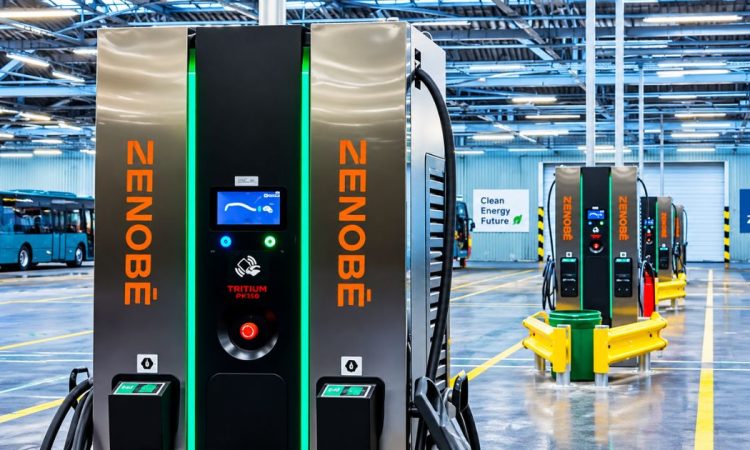

Zenobe is a London based company that builds and runs giant batteries connected to Britain’s electricity grid. It also helps bus operators switch to electric fleets. If you have seen headlines about “Europe’s largest battery” in Scotland, Zenobe was often behind them.
Why does that matter? Britain is adding more wind and solar power every year, but the weather does not follow demand. Batteries soak up spare electricity and release it when it is needed. This article explains what Zenobe does, where its main sites are and what it could mean for your energy bills. We have checked the key facts against company announcements and trade reports.
What Is Zenobe and What Does It Do?
Zenobe, which the company styles as Zenobē, was founded in 2017 and is based in London. It describes itself as a leading owner and operator of grid-scale batteries on the GB transmission network. In plain English, that means it connects very large battery sites to the high-voltage lines that carry power across the country.
The business has two main strands:
- Battery energy storage: owning, building and operating large battery energy storage systems (BESS) that trade power and support the grid.
- Fleet electrification: an end to end electric bus offer, launched in 2019, to help operators make the switch.
Its wider offer also includes second life battery services, which give used vehicle batteries another job once they can no longer power a bus.
Zenobe works with utilities, businesses and transport operators. As far as its public information shows, it does not sell to households. So if you searched for Zenobe hoping to buy a home battery, you will need a different supplier.
How Do Grid Scale Batteries Like Zenobe’s Work?
A grid scale battery works like a giant version of the one in your phone. It charges when electricity is plentiful and cheap, then sends power back when supply is tight and prices rise.
Two figures describe each site. Megawatts (MW) show how much power the battery can deliver at once. Megawatt hours (MWh) show how much energy it can store. A 300MW/600MWh battery can therefore supply 300MW for two hours.
Zenobe earns money in several ways. It trades electricity on the wholesale market, sells balancing services to the grid operator and, at some sites, delivers specialist grid support contracts. Founder James Basden has called its Kilmarnock South site a subsidy free battery.
Zenobe’s Biggest Battery Projects
Capenhurst, Cheshire
Capenhurst, near Chester, was an early landmark. The 100MW/107MWh site was billed as Europe’s largest transmission-connected battery when it launched. It also won a long term contract from the grid operator to absorb reactive power, which helps keep voltage stable.
Reactive power is a technical feature of alternating current. It does not do useful work itself, but networks need it to hold voltage steady. Traditionally, power stations supplied it. Capenhurst showed that a battery could take on that role.
Scotland: Blackhillock, Kilmarnock South and Eccles
Scotland is now a big focus for Zenobe. The company has put hundreds of millions of pounds into three transmission connected sites:
- Blackhillock, near Inverness: the first 200MW went live in March 2025, with expansion to 300MW/600MWh planned.
- Kilmarnock South, East Ayrshire: the 300MW/600MWh battery began commercial operations in January 2026.
- Eccles: a 400MW/800MWh site, the company’s largest, backed by £220 million of debt and due online in 2027.
Eccles will use Tesla Megapack 2 XL units, which was reported as a UK first. Because plans and dates shift, check Zenobe’s own news page for the latest status.
Zenobe has described its Scottish activity as a £1 billion investment, with around 1.3GW of storage operating or under construction.
What Are Stability Services and Why Do They Matter?
Traditional power stations use heavy spinning turbines. These give the grid inertia, a natural resistance to sudden changes in frequency. Wind and solar farms do not provide that in the same way, so the grid operator needs other tools as older power stations close.
Zenobe’s Blackhillock and Kilmarnock South batteries use grid forming inverters. These electronic controls can mimic that stabilising effect, and both sites were awarded contracts under the National Energy System Operator’s (NESO) Stability Pathfinder programme.
There is a second benefit. When wind farms in Scotland produce more power than the network can carry south, some are paid to switch off. Stability-focused batteries can help cut that waste, according to Zenobe.
How Did Zenobe Grow So Quickly?
Zenobe started small and scaled fast. A rough timeline shows the pace:
- 2017: founded in London.
- 2020: 10MW batteries at King Barn and Hill Farm join grid-support trials and the Balancing Mechanism.
- 2022: a 50MW/100MWh battery at Wishaw, Scotland, is announced.
- 2025: Blackhillock begins operating in March.
- 2026: Kilmarnock South enters commercial operation in January.
Since then, new sites have grown in size, from tens of megawatts to hundreds.
Zenobe’s Electric Bus and Fleet Business
Batteries are only half the story. Zenobe launched an end to end electric bus solution in 2019, backed by financing aimed at fleet electrification.
A 2020 investment round set targets of a further 500MWh of storage and 1,000 electric buses.
The two halves of the business overlap, because battery management skills carry across from road vehicles to grid sites.
Who Funds Zenobe?
Zenobe has attracted a mix of equity investors and lenders. In 2020, Infracapital, the infrastructure arm of M&G, committed £150 million. Japanese energy firm JERA has also backed the company, and Santander provided an early £25 million debt facility. More recently, NatWest and KKR Capital Markets arranged financing for Eccles.
Large debt raises like these show how seriously lenders now treat battery storage as long-term infrastructure.
Will Zenobe Batteries Change Your Energy Bills?
Not directly, and not by much on their own. Zenobe says its batteries help reduce bills by making better use of renewable power. The reasoning is simple: wasted wind power and expensive backup generation both add costs that eventually feed through to consumers.
However, no single battery will change a household bill noticeably. Savings depend on wider factors such as gas prices, network costs and how quickly new storage connects to the grid. Treat big promises with some caution.
Why Battery Storage Matters for Britain’s Energy Plans
The UK government aims to deliver clean power by 2030, and wind power is central to that goal. Wind output rises and falls with the weather, so the system needs somewhere to park surplus power.
Batteries do not generate electricity. They shift it in time, from windy hours to calm ones. Companies such as Zenobe, Penso Power and others now compete to provide that flexibility, and the sector is growing quickly.
That growth brings challenges. One industry expert has warned that planning barriers could slow new projects, even after a record year for grid-scale battery deployments.
Common Concerns About Large Battery Sites
Local communities often ask about safety, noise and land use near battery sites. These are fair questions. Larger projects in Scotland need consent through the Scottish Government’s Energy Consents Unit, and developers must meet fire-safety and environmental requirements. Zenobe also operates a community benefit fund for Kilmarnock South, administered by Foundation Scotland.
Where to Find Official Zenobe Information
For current news, project updates and vacancies, use Zenobe’s official website at zenobe.com. Trade sites such as Energy Storage.news also report on its projects. Company claims about size and rankings change quickly, so check dates before quoting figures.
Frequently Asked Questions
What does Zenobe do?
Zenobe owns and operates grid scale batteries that store electricity and support the UK transmission network. It also offers electric bus and fleet solutions, working mainly with utilities, businesses and transport operators.
Where is Zenobe’s largest battery?
Eccles in Scotland will be its largest at 400MW/800MWh, due online in 2027. Until then, Kilmarnock South at 300MW/600MWh is among its largest operating sites.
Is Zenobe a UK company?
Yes. Zenobe was founded in 2017 and is headquartered in London, though it is backed by investors including M&G’s Infracapital, JERA and several major banks.
Why does the UK need grid scale battery storage?
Batteries store surplus wind and solar power and release it when demand rises. They also provide stability services, helping the grid stay steady as traditional power stations close.
Conclusion
Zenobe has grown from a start-up founded in 2017 into one of Britain’s most visible energy storage companies. Its sites at Capenhurst, Blackhillock and Kilmarnock South show how large batteries can store surplus renewable power and help keep the grid stable, while Eccles points to even bigger projects ahead. Zenobe’s batteries alone will not change your bill overnight, and planning and cost challenges remain. Even so, its story shows how storage is becoming central to Britain’s clean energy plans. Watch how its next projects perform, because they will help shape the future of the UK grid.