
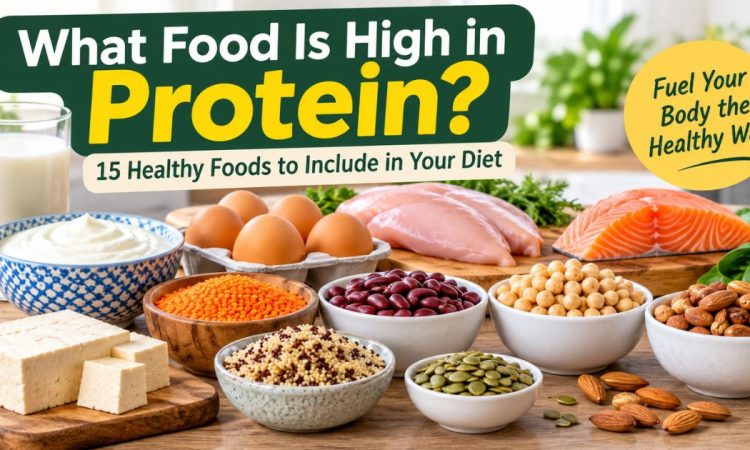

What food is high in protein? The short answer: lean meat, fish, eggs, dairy, beans, lentils, tofu and nuts all deliver plenty. Chicken breast, tuna and Greek yoghurt sit near the top of the list, while lentils and soya lead the plant-based options.
Protein helps your body build muscle, repair tissue and keep you feeling full. Most UK adults need around 0.75g per kilogram of body weight each day, according to the NHS. That is roughly 55g for an average man and 45g for an average woman.
This guide shows which foods give you the most protein per portion, how to mix them, and how to fit them into everyday meals.
What Food Is High in Protein? The Quick Answer
Animal foods usually have the most protein per 100g. Plant foods come close once you eat them in sensible portions. These are approximate figures for foods as eaten, and labels vary by brand:
- Chicken breast: about 31g per 100g
- Turkey breast: about 29g
- Lean beef or lamb: about 26–30g
- Tuna (tinned in water): about 25g
- Salmon: about 22g
- Eggs: about 6g each
- Greek yoghurt: about 9g per 100g
- Cottage cheese: about 11g per 100g
- Lentils (cooked): about 9g
- Tofu: about 8–12g
- Peanuts: about 25g
Remember that these are per 100g, not per meal. A 150g chicken breast gives around 46g, while a spoonful of peanut butter gives only about 4g.
Meat, Poultry and Halal Options
Meat is the most familiar answer to the question of which food is high in protein. Chicken and turkey breast are lean, affordable and easy to cook. Beef, lamb and mince give plenty of protein too, along with iron and vitamin B12.
Halal shoppers have a wide choice. Many UK supermarkets and local butchers sell halal chicken, lamb and beef, and the protein content is the same as non-halal meat. Look for a trusted certification mark if that matters to you.
Choose leaner cuts where you can. Skinless chicken, turkey mince and trimmed lamb keep saturated fat lower. The NHS advises people who eat more than 90g of red and processed meat a day to cut down to 70g.
Fish and Seafood
Fish is a lean, protein-rich choice. Tinned tuna, salmon, mackerel and sardines are cheap, keep for months and need no cooking. White fish such as cod and haddock offer around 18-20g per 100g with very little fat.
The NHS recommends two portions of fish a week, including one oily portion such as salmon or mackerel. Oily fish provides omega-3 fats, which support heart health. If you are pregnant, check NHS guidance on which fish to limit.
Eggs and Dairy
Eggs are one of the simplest protein foods. A medium egg gives around 6g, plus vitamin D and choline. Three eggs on toast make a solid breakfast.
Dairy adds a lot too. Greek-style yoghurt, skyr and cottage cheese are especially rich. A 200g pot of skyr can supply around 20g. Milk gives about 3.5g per 100ml, and hard cheeses such as cheddar offer roughly 25g per 100g, though they also contain plenty of salt and fat.
Choose lower-fat versions if you are watching calories, and check labels for added sugar in flavoured yoghurts.
Plant Based High Protein Foods
You do not need meat to hit your protein target. Pulses, soya products, grains, nuts and seeds all contribute.
Pulses are the stars. Cooked lentils, chickpeas, kidney beans and black beans offer roughly 7-9g per 100g. They are also high in fibre. Tinned pulses are among the cheapest protein sources in UK supermarkets.
Soya foods are among the few plant sources with all nine essential amino acids. Tofu, tempeh, edamame beans and soya milk fit here. Tofu gives about 8-12g per 100g, while tempeh reaches around 19g.
Nuts and seeds help too. Peanuts, almonds, pumpkin seeds and hemp seeds are protein-rich, but they are also high in calories, so small handfuls work best. Quinoa and oats add a modest boost to meals.
How Much Protein Do You Actually Need?
The NHS figure of 0.75g per kilogram of body weight is a sensible starting point for most healthy adults. Someone weighing 70kg needs roughly 52g a day. That is easier to reach than many people think.
Here is a simple example. Two eggs at breakfast give about 12g. A tin of tuna at lunch adds around 25g. A handful of almonds as a snack gives roughly 6g. Chicken and rice for dinner can easily add 30g or more. That already totals over 70g.
Needs rise for some people. Older adults and those doing regular strength training may need more. If you have kidney disease or any medical condition, speak to your GP or a registered dietitian before changing your diet.
Tips for Adding More Protein to Your Meals
Small changes make the biggest difference. Try these ideas:
- Swap sugary cereal for porridge made with milk, topped with seeds.
- Add lentils or beans to curries, soups and stews.
- Keep boiled eggs or tinned fish handy for quick lunches.
- Choose Greek yoghurt instead of cream or mayonnaise in dips.
- Snack on roasted chickpeas, nuts or cottage cheese.
- Spread your protein across the day rather than eating it all at dinner.
Eating a mix of sources also helps. Combining rice with lentils or hummus with wholemeal bread supplies a wider range of amino acids. You do not need to combine them at the same meal, as long as your overall diet is varied.
Are Protein Powders and Bars Necessary?
Most people do not need them. Whole foods give protein along with vitamins, minerals and fibre. Powders can be handy if you struggle to eat enough, train hard or have a busy routine, but they are a convenience, not a requirement.
If you buy bars or shakes, read the label. Some contain a lot of sugar and saturated fat, so they can resemble a chocolate bar more than a health food. Check ingredients too, because some products use gelatine from animal sources, which matters for halal diets. Look for a recognised halal certification or a plant-based option.
Budget-Friendly High Protein Foods
Eating well on a tight budget is realistic. Dried or tinned lentils, beans and chickpeas cost little. Eggs, frozen chicken thighs, tinned fish and large tubs of plain yoghurt also offer good value per gram of protein.
Frozen fish and frozen edamame beans keep for months and cut food waste. Buying whole chickens or family packs and freezing portions can lower the cost of meat. Compare prices per kilogram rather than per pack, since the unit price on the shelf label makes this easy.
Common Mistakes When Eating for Protein
Some habits undermine good intentions. Here are the ones worth avoiding.
Relying on one food is the first. Eating chicken breast at every meal gets boring fast and misses out on other nutrients. Variety keeps your diet balanced and your meals interesting.
Ignoring the rest of the plate is another. Protein matters, but so do vegetables, wholegrains and healthy fats. A plate piled with meat and little else is not a balanced meal.
Finally, many people overdo portions. More protein does not automatically mean more muscle. Your body uses what it needs, and the excess is used for energy or stored as fat.
Frequently Asked Questions
What is the highest protein food?
Among everyday foods, skinless chicken breast, turkey breast and tuna rank near the top at around 25-31g per 100g. Parmesan and dried soya products are higher by weight, but people eat far less of them.
What vegetarian food is high in protein?
Lentils, chickpeas, beans, tofu, tempeh, eggs, Greek yoghurt and cottage cheese are all excellent vegetarian choices. Combine a few of them across the day to cover your needs comfortably.
Which fruit and vegetables contain protein?
Most contain little. Peas, spinach, broccoli and sweetcorn offer roughly 2-5g per 100g. They work best as a supporting act, not your main protein source.
Can you get enough protein without meat?
Yes. A varied diet of pulses, soya foods, grains, nuts, seeds and, if you eat them, eggs and dairy can meet the recommended intake for most healthy adults.
Conclusion
So, what food is high in protein? Chicken, turkey, fish, eggs, dairy, lentils, beans, tofu and nuts all earn a place on your plate. Choose a mix that suits your budget, beliefs and taste, and check labels on processed products. Most healthy adults can meet the NHS guideline through ordinary meals, without expensive supplements.
Aim for variety, keep portions sensible and build each meal around at least one good protein source. Small, steady changes add up quickly. Start with your next shopping list, and you will soon find that eating enough protein is far simpler than it first seems.
for more information click here