
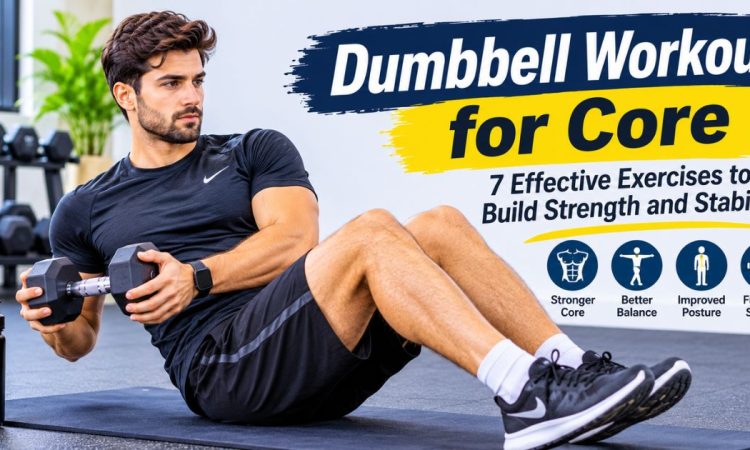

Planks and crunches get most of the attention, but a dumbbell workout for core strength can take you further. Adding weight makes your midsection work harder to keep you steady, which mirrors real life. Think carrying shopping bags, lifting a child or climbing stairs with a rucksack.
You do not need a gym, either. One or two dumbbells and a patch of floor are enough. This guide explains how weighted core training works, which exercises earn their place, how heavy to go and how to build a simple weekly routine. Whether you are a beginner or returning after a break, you will find a plan that fits.
What Does Your Core Actually Do?
Your core is more than a six pack. It is a group of muscles around your trunk. These include the rectus abdominis (the classic six-pack muscle), the obliques at your sides, the deep transverse abdominis and the muscles along your spine. Together they brace your body, protect your back and pass force between your upper and lower half.
Most of that job is stabilising rather than bending. That shapes how you should train. A good dumbbell core workout includes moves that resist movement, moves that add rotation and moves that bend the trunk under load.
Why Use Dumbbells for Core Training?
Bodyweight exercises are a fine start. Once they feel easy, though, your muscles need a bigger challenge to keep adapting. Dumbbells provide that cheaply and simply.
- Easy progress: Moving from 4kg to 5kg raises the load without changing the exercise.
- Offset loading: Holding a weight on one side forces your trunk to resist tilting.
- Little space needed: A mat and a pair of dumbbells fit in most living rooms.
- Suitable for all levels: You simply choose a lighter or heavier weight.
The UK Chief Medical Officers’ physical activity guidelines recommend strength exercises for all major muscle groups on at least two days a week. Your core counts as one of those groups, so a weighted session fits neatly into that target.
How Heavy Should Your Dumbbells Be?
Start lighter than you think. Core exercises reward control, not ego.
Choose a weight you can lift for 10 to 12 steady repetitions, with two or three left in the tank. Many beginners do well with 2kg to 6kg, although this varies from person to person.
If your lower back takes over or you start swinging, the weight is too heavy. Progress in this order: more repetitions first, then extra sets, then a heavier dumbbell.
Choosing the Right Dumbbells
Fixed hex dumbbells are sturdy, stay put on the floor and suit most home workouts. Adjustable sets save space and let you change weight in small steps, although swapping plates takes time.
A rubber-coated pair is gentler on wooden floors and quieter when you put it down. Check that the handle feels comfortable, because a poor grip can end a set early. Many people find three weights, such as 3kg, 5kg and 8kg, cover most exercises.
How to Brace Your Core Before Each Rep
Bracing is the skill behind every move in this list. It is not the same as sucking your stomach in, which only makes breathing harder.
Try this before each set. Breathe in through your nose, letting your ribs expand. As you breathe out, gently draw your ribs down towards your hips and tighten around your waist, as if bracing for a nudge. Keep that tension while you breathe normally through the set. Practise it with no weight first until it feels natural.
8 Best Dumbbell Core Exercises
Here are eight moves that cover stability, rotation and bending. Do each one slowly and breathe steadily.
- Suitcase carry: Hold one dumbbell at your side and walk 20 paces, then swap hands. Keep your ribs over your hips and do not lean. Your obliques work hard to stop you tilting.
- Dumbbell dead bug: Lie on your back holding a light dumbbell above your chest. Lower the opposite arm and leg towards the floor, keeping your lower back pressed down. Return and switch sides.
- Plank pull-through: From a high plank, place a dumbbell beside one hand. Reach under your body with the other hand, drag it across and repeat. Keep your hips still.
- Renegade row: Hold two hex dumbbells in a high plank with your feet wide. Row one weight towards your ribs while the other hand stays planted. Your core stops your hips twisting. This is an advanced move, so build up gradually.
- Standing overhead press: Press one dumbbell overhead from shoulder height. Keep your ribs down and your stomach tight so your back does not arch. The unbalanced load makes your trunk work to stay upright.
- Dumbbell woodchop: Hold one dumbbell with both hands by your hip. Rotate and lift it diagonally across your body to above the opposite shoulder, pivoting your back foot. Control the way down.
- Russian twist: Sit with knees bent and heels on the floor, leaning back slightly. Hold a dumbbell at your chest and rotate side to side. Keep your chest lifted. Lift your feet only if you can keep good form.
- Dumbbell sit-up: Lie with knees bent and hug a dumbbell to your chest. Curl up slowly, then lower with control. Do not yank on your neck.
Dumbbell Workout for Core Strength: A Simple Weekly Plan
Aim for two or three sessions a week, with at least one rest day between them. Your core recovers like any other muscle.
For beginners, pick four exercises and complete two or three rounds:
- Suitcase carry: 20 paces each side
- Dead bug: 8 reps per side
- Woodchop: 10 reps per side
- Dumbbell sit-up: 10 reps
Rest for 45 to 60 seconds between exercises. As this becomes comfortable, add a plank pull-through and an overhead press. After four to six weeks, try a heavier weight or add a third round.
For a tougher session, swap in four harder moves: renegade rows (6 per side), single arm overhead presses (8 per side), Russian twists (20 in total) and plank pull-throughs (8 per side). Complete three rounds, resting for a minute between exercises.
A warm-up helps too. Five minutes of brisk walking and gentle trunk rotations prepares your body.
Common Mistakes That Waste Your Effort
A few habits hold people back. Spotting them early saves time and protects your back.
- Going too heavy: Poor form shifts the work from your abdominals to your lower back and hip flexors.
- Rushing: Fast, swinging reps use momentum rather than muscle.
- Holding your breath: Breathe out on the hardest part of each rep.
- Neglecting the back of your trunk: Balance front work with moves that train your spine muscles, such as carries and rows.
- Expecting spot reduction: Core exercises build muscle, but they do not burn fat from your stomach alone. Overall nutrition, sleep and activity matter too.
Who Should Take Extra Care?
Most healthy adults can train their core with dumbbells, but a few situations call for advice first. Speak to a GP or physiotherapist if you have back pain, are pregnant or postnatal, have had abdominal surgery or have a hernia.
Stop any exercise that causes sharp pain. Mild muscle fatigue is normal. Pain in your joints or spine is not. The NHS website also offers strength and flexibility exercise guidance.
Frequently Asked Questions
How often should I do a dumbbell workout for core strength?
Two or three times a week works well for most people. Leave at least one rest day between sessions so your muscles can recover and adapt.
Can dumbbells give me a six pack?
Dumbbells can build the muscles underneath, but visible abs also depend on body fat levels. Combine regular strength training with balanced eating and enough sleep for the best chance of seeing definition.
What is the best dumbbell exercise for the core?
No single move wins. The suitcase carry and dead bug are excellent starting points because they train stability safely, while woodchops and sit-ups add rotation and bending.
How heavy should dumbbells be for core exercises?
Choose a weight that lets you finish 10 to 12 controlled repetitions with two or three left in reserve. Many beginners start between 2kg and 6kg.
Conclusion
A dumbbell workout for core strength is simple, affordable and effective. It trains your trunk to brace, rotate and bend, which makes everyday movement easier and protects your back.
Start with a light weight, learn to brace properly and choose a handful of the exercises above. Train two or three times a week, and add reps or weight slowly as you improve. Consistency matters far more than heavy dumbbells or complicated routines. Pick one move, grab your weights, and begin your first set today.
for more information click here