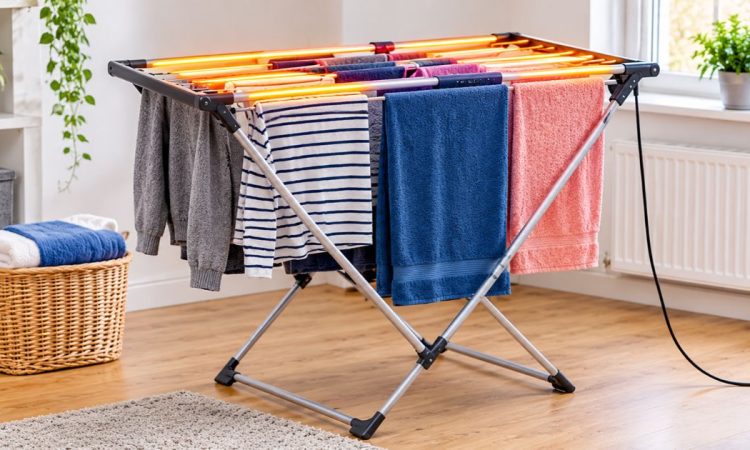

Damp washing draped over radiators is a familiar winter headache. A Lidl heated clothes airer offers a cheaper alternative to the tumble dryer, and it often sells out quickly when it appears in store. But is it worth buying? This guide explains what the airer is, what it costs to buy and run, and how to use it safely. You will also find its limits, plus alternatives if your local shop has none left. Prices and stock change often, so treat the figures below as examples rather than promises. We have kept the advice practical, so you can decide before you queue at the shop.
What Is a Lidl Heated Clothes Airer?
A heated clothes airer is a foldable rack with built-in heating elements. You plug it in, hang wet washing on the warm bars, and the gentle heat dries it over several hours. Think of a heated towel rail with far more space.
Lidl does not sell one permanent model. It releases heated airers as seasonal Middle Aisle offers, often in the colder months, and the brand and design change from year to year. Past examples include the Addis Heated Wing Clothes Airer and other winged designs with around 12 metres of drying space.
The wing shape matters. The side panels lift up to hold sleeves, trousers and towels, then fold down for storage. Most models are light enough to carry from room to room.
How Much Does a Lidl Heated Clothes Airer Cost?
Prices depend on the year and the model. In October 2022, Lidl brought back the Addis Heated Wing Clothes Airer at £44.99. Another winged airer from the retailer was reported at £29.99, with 12 metres of drying space and a 15kg load limit.
Those are past examples, not current prices. They do show the typical range, which sits below some branded rivals. Check the Lidl website or the weekly leaflet for the latest offer before you set off.
Stock is the bigger challenge. Middle Aisle items are sold while stocks last, and popular lines can sell out fast. Lidl has brought back a sold-out airer before, so a missed deal may return later in the season.
When and Where to Find a Lidl Heated Clothes Airer
Check Lidl’s website and the weekly Middle Aisle leaflet, which lists upcoming offers. Some items are sold in store only, so a quick call to your local branch can save a wasted trip.
Arrive early on the first day of an offer, because popular items sell out quickly. Check the box for the model name, wattage, drying space and warranty before you pay. Keep your receipt too, in case of a fault.
How Much Does a Heated Clothes Airer Cost to Run?
This is the question most readers care about, and the sum is simple. Divide the wattage by 1,000, then multiply by the hours used and your price per kilowatt hour (kWh).
A 300W airer uses 0.3kWh per hour. At an example rate of 25p per kWh, that is about 7.5p an hour, or roughly 60p for eight hours. Your tariff will change the result, so check your latest bill.
Lidl’s 2022 promotion for the Addis airer claimed 7p an hour, against 85p for an average tumble dryer. Those numbers came from the energy price cap at the time. Today’s rates differ, but the gap stays wide because a standard tumble dryer draws far more power. Heat pump dryers use less, so the gap is narrower there.
There is one catch. Airers work slowly, so they run for longer. Ideal Home puts the average at four to eight hours. Even then, a full load usually costs less than a tumble dryer cycle.
How Well Does a Lidl Heated Clothes Airer Dry Washing?
Expect steady drying rather than speed. T-shirts, underwear and socks may be dry within a few hours. Jeans, towels and bedding take longer, sometimes overnight. Cold rooms slow things down, so a warmer space helps.
A few habits make a real difference:
- Spin clothes well first. Less water in the fabric means shorter drying times.
- Leave gaps between garments so warm air can move around them.
- Put thicker items on the central bars and lighter ones on the wings.
- Turn heavy items halfway through the drying time.
- Use a cover made for heated airers only if the manual allows it.
Stay within the stated load limit, which one reported Lidl model listed as 15kg. Overloading slows drying and strains the frame.
Does a Heated Airer Cause Damp and Condensation?
It can. Heated airers speed up drying, but the moisture still has to go somewhere. It enters the room air, and in a closed room it can steam up windows and, over time, encourage mould.
Open a window slightly, switch on an extractor fan, or run a dehumidifier nearby. Choose a room you can ventilate, and avoid placing the airer against a cold, bare wall where condensation collects.
This matters most in small flats and rented homes, where damp is harder to fix. A little ventilation costs almost nothing and protects your walls.
How to Use a Heated Clothes Airer Safely
Heated airers run at low power and are designed for the job, but sensible habits still matter. Electrical Safety First publishes useful guidance on safe appliance use.
- Read the manual before first use.
- Place it on a stable, dry surface, away from curtains and furniture.
- Never cover the whole unit with a blanket or duvet.
- Plug it straight into a wall socket and avoid daisy-chained extension leads.
- Check the cable for damage and stop using it if you find any.
- Switch it off and unplug it when the washing is dry.
- Keep it away from bathrooms and water unless the manual confirms it is suitable.
Check the model’s instructions about unattended use too. Some manufacturers advise against leaving it running while nobody is home.
Lidl Heated Airer Alternatives If Stock Runs Out
If your local store has sold out, other supermarkets and retailers offer similar products. Aldi has sold Easy Home heated airers, including a 300W upright model listed at 2.4kWh for eight hours of use. George Home once sold a winged airer at £25, reduced from £40, with a 100-day warranty. Currys lists a Logik three-tier model with 21 metres of drying space and a 30kg load limit. Treat these as examples, as ranges and prices change.
When you compare models, look beyond the price tag:
- Drying space in metres
- Maximum load in kilograms
- Wattage and cord length
- Warranty length
- Folded size and weight
Is a Lidl Heated Clothes Airer Worth Buying?
For many households, yes. It suits small families, flats without a garden, and anyone trying to use the tumble dryer less. The low wattage keeps bills down, and the folding design saves space.
It is less suitable for large families who wash daily. One airer handles roughly one load at a time, and it will not rival a tumble dryer for speed. Poorly ventilated rooms are another reason to think twice.
A sensible approach is to buy the airer only if you can dry in a ventilated space and expect to use it regularly. Used regularly in place of a tumble dryer, it can lower your laundry costs, though savings depend on your tariff and habits.
Frequently Asked Questions
How much does a Lidl heated clothes airer cost?
Past Lidl models have ranged from about £29.99 to £44.99. Prices change by season and model, so check the Lidl website or weekly leaflet for the current offer.
How long does a heated airer take to dry clothes?
Most take around four to eight hours for a typical load. Thick items such as jeans, towels and bedding may need longer, especially in a cold room.
Is a heated airer cheaper than a tumble dryer?
Usually, yes. A 300W airer draws far less power than a standard tumble dryer, even though it runs for longer. Heat pump dryers narrow the gap.
Can I leave a heated clothes airer on overnight?
Check the manual first. Some manufacturers advise against unattended use, so switch it off before bed unless the instructions clearly say it is safe to continue.
Conclusion
A Lidl heated clothes airer can be a cheap, simple way to dry laundry indoors when the weather turns. It costs pennies per hour to run, folds away neatly and suits smaller households best. Remember the limits, though. It dries slowly, needs ventilation and works best with a modest load.
Check the weight limit, wattage and warranty, follow the safety advice, and treat any price you read online as a guide only. Confirm the current model with Lidl, then decide whether the offer suits your home.
for more information click here