
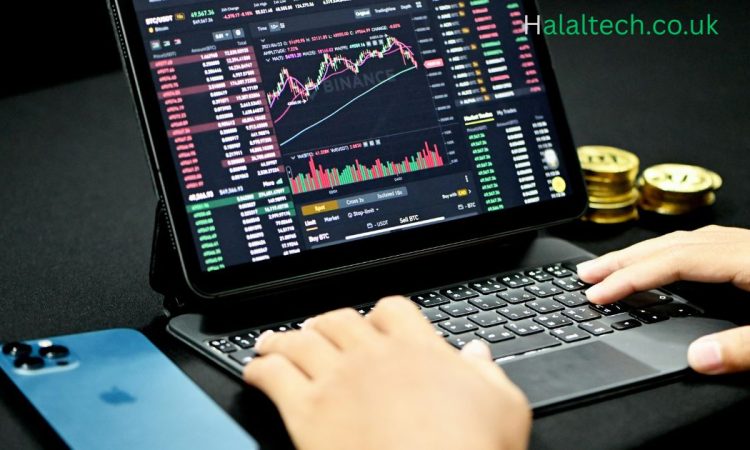

If you’ve ever swapped pounds for euros at Gatwick before a holiday, you’ve already taken part in the foreign exchange market you just weren’t trying to make money from it. So what is forex trading, really? In short, it’s the business of buying one currency while selling another, hoping the price moves your way. It’s the biggest financial market on earth, it runs 24 hours a day from Sunday evening to Friday night, and it’s wide open to anyone in the UK with a phone and a few hundred quid.
But “open to everyone” doesn’t mean “easy for everyone”. Let me explain how it actually works, and what I wish someone had told me before I started.
What Is Forex Trading and Why Does Anyone Bother?
Forex — short for foreign exchange, sometimes written FX — is traded in pairs. GBP/USD, EUR/GBP, USD/JPY. When you buy GBP/USD, you’re effectively betting the pound will strengthen against the dollar. If it does, you profit. If it doesn’t, you lose.
The prices move because the world keeps moving. A Bank of England rate decision, a surprise inflation print, a political wobble, a US jobs report on the first Friday of the month — all of it nudges currencies up or down. That constant flow is what traders try to read.
Why bother at all? Three reasons people usually give me: the market is open at hours that suit a full-time job, the costs of entry are low compared to property or even shares, and you can trade in both directions — you can profit when the pound falls, not just when it rises.
That last point is also exactly why people get hurt.
The Honest Bit: Most People Lose Money
Here’s the statistic that every UK broker is legally required to print on their website: typically 70–80% of retail investor accounts lose money when trading CFDs and spread bets. You’ll see the exact figure in the small print of any FCA-regulated broker’s homepage. It’s not marketing spin — the Financial Conduct Authority makes them publish it.
Read that again. In a room of ten new traders, seven or eight walk away poorer.
I’m not telling you this to put you off. I’m telling you because anyone who opens with “make £500 a day from your sofa” is selling you something, and it usually isn’t a trading strategy. Treat forex trading as a skill that takes years, not a side hustle that pays by Friday, and you’ll already be ahead of most beginners.
How a Forex Trade Actually Works
Say GBP/USD is quoted at 1.2650. That means one pound buys 1.2650 US dollars.
You think the pound is going up, so you buy. If the price climbs to 1.2700, you’ve gained 50 pips — a pip being the standard unit of movement, usually the fourth decimal place. What that’s worth in pounds depends on your position size.
Three terms worth learning on day one:
- Spread — the small gap between the buy and sell price. That’s how most brokers get paid.
- Leverage — borrowed exposure. UK retail traders are capped at 30:1 on major pairs under FCA rules, meaning £100 can control £3,000.
- Stop loss — an automatic exit that closes your trade at a price you choose. Non-negotiable, in my view.
Leverage is the part people fall in love with and then regret. It magnifies gains and losses in exactly equal measure. A 1% move against you on 30:1 leverage wipes out roughly 30% of your stake.
Getting Started in the UK: A Simple Guide
If you’re determined to try it, here’s the order I’d do things in.
1. Check the broker is FCA-regulated. Search the firm on the FCA Register before you deposit a penny. Regulated UK firms also come with FSCS protection on client money up to £85,000. Offshore brokers offering 500:1 leverage are not doing you a favour.
2. Decide spread betting or CFDs. In the UK, spread betting profits are currently free of Capital Gains Tax for most individuals, while CFD profits aren’t — though CFD losses can be offset against gains. Tax treatment depends on your circumstances and can change, so check with an accountant rather than a forum.
3. Open a demo account and use it properly. Not for a weekend. Give it two or three months and trade it as if the money were real.
4. Write a plan before you trade. Which pair, which times of day, what triggers an entry, where the stop goes, when you stop for the day.
5. Start small. Genuinely small. Your first live account exists to teach you how you behave under pressure, not to fund a new car.
Mistakes I Made, So You Don’t Have To
My first real lesson came during a Bank of England announcement. I’d read the analysis, I was convinced rates were staying put, and I went in far heavier than usual on GBP/USD. The decision landed roughly as I expected — and the price still went the opposite way for twenty minutes because of the wording in the statement. I didn’t have a stop in place. I sat there watching, telling myself it would come back.
It did come back, eventually. Two days later. Long after I’d closed it in a panic.
The trade lost me about the cost of a weekend in Edinburgh, which was cheap tuition for the lesson: being right about the news is not the same as being right about the price.
The other classic errors I see in beginners are revenge trading after a loss, moving a stop loss further away to avoid taking the hit, and overtrading — forcing six trades on a quiet Tuesday because you’re bored.
Do any of these sound familiar from your own experience? If so, it’s not a character flaw. It’s the default human setting.
The One Tip Professionals Repeat
Ask experienced traders what separates them from beginners and you’ll rarely hear “a better indicator”. You’ll hear risk management.
The standard professional rule is to risk no more than 1–2% of your account on any single trade. With a £1,000 account, that’s £10–£20 at risk per position. It sounds painfully slow — and it is, deliberately. It means ten losing trades in a row costs you around 10–20% rather than everything, and you’re still in the game to trade the eleventh.
A second tip worth its weight: keep a trading journal. Date, pair, reason for entry, outcome, and the important one how you felt. Patterns in your psychology show up faster in a notebook than in a chart.
FAQ
How much money do I need to start forex trading in the UK? Many FCA-regulated brokers let you open an account with £100 £250. Whether that’s enough is another question small accounts tempt people into oversized positions. Only ever fund it with money you can genuinely afford to lose.
Is forex trading legal in the UK? Yes, and it’s regulated by the FCA. Retail leverage limits, negative balance protection and mandatory risk warnings all apply to UK-regulated firms. Trading through an unregulated offshore broker is where the real danger sits.
How long before I’m any good at it? Longer than you’d like. Most consistently profitable traders I’ve spoken to describe one to three years of losing or breaking even first. If someone promises consistency within weeks, walk away.
Final Thoughts
So, what is forex trading? It’s a real, regulated market with genuine opportunity and a genuinely high failure rate for beginners who skip the boring parts. Learn the mechanics, respect leverage, risk a tiny slice per trade, and keep a journal. Do that and you give yourself a fighting chance.
Take your time. The market will still be there next month.
This article is for information only and isn’t financial advice. Trading carries a high risk of losing money. Do your own research or speak to a regulated adviser.


)