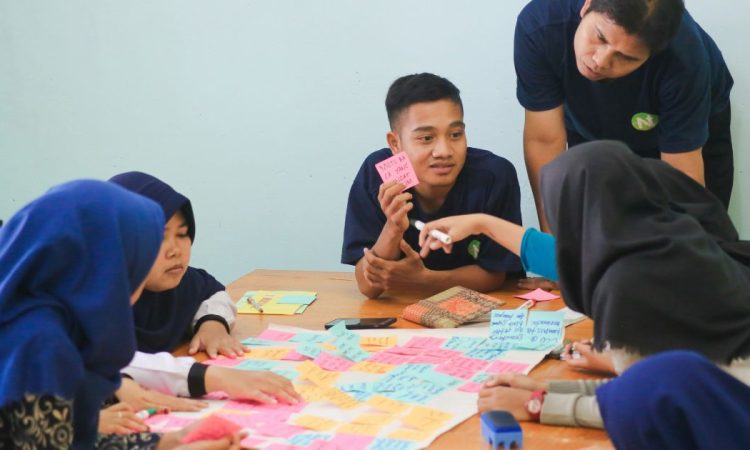

Eid is a joyful occasion celebrated by Muslim families around the world, and schools can use it as an opportunity to help pupils learn about faith, culture, generosity and community. With the right Eid celebration ideas for classroom activities, teachers can create an enjoyable experience without turning the lesson into something complicated or expensive.
A classroom celebration might include colourful crafts, storytelling, kindness activities, quizzes, decorations or a small class party. The aim does not have to be simply to “celebrate a festival”. Eid can also provide a useful starting point for conversations about how different families mark important occasions and why learning about each other’s traditions matters.
For UK schools in particular, thoughtful Eid activities can complement wider work around religious education, cultural awareness and respectful classroom communities.
Below are practical ideas that can be adapted for different ages, class sizes and school settings.
What Is Eid and Why Is It Celebrated?
Before planning activities, pupils should understand what Eid actually means.
There are two main Islamic festivals known as Eid: Eid al-Fitr and Eid al-Adha.
Eid al-Fitr comes at the end of Ramadan, the Islamic month in which Muslims fast from dawn until sunset. It is a joyful occasion associated with prayer, family gatherings, food, charity and spending time with loved ones.
Eid al-Adha takes place later in the Islamic calendar and is connected with the story of Prophet Ibrahim (Abraham) and his devotion and obedience to God. Charity, prayer, family and sharing with others are also important aspects of the occasion.
Exactly how Eid is marked can differ between families, communities and countries. That variation is worth explaining to children. There is no need to present every Muslim household as celebrating in precisely the same way.
This distinction can make classroom activities more accurate as well as more inclusive.
1. Create an Eid Classroom Display
A classroom display is one of the simplest ways to introduce Eid.
Choose a noticeboard or classroom wall and invite pupils to contribute artwork, short facts, greetings and other pieces they create during lessons.
The display could contain:
- An “Eid Mubarak” heading
- Pupil-made cards
- Facts about Eid
- Paper lanterns
- Geometric patterns
- Stars and crescent-themed artwork
- Kindness messages
- Drawings of family celebrations
- A simple explanation of Ramadan and Eid al-Fitr
Rather than buying every decoration, let pupils make most of the display themselves. This turns decorating into a learning activity.
Teachers could also include a world map and highlight several countries where Muslim communities celebrate Eid. Pupils can then explore how foods, clothing and local customs may vary.
The result becomes more than decoration: it becomes a visual learning resource.
2. Make Handmade Eid Cards
Card-making works particularly well with younger pupils, although older children can create more sophisticated designs.
Provide coloured card, pencils, child-safe scissors and craft materials already available in school. Pupils can create a card for a friend, relative or someone in their community.
A simple message might say:
Eid Mubarak! Wishing you a happy and peaceful Eid.
This activity can also become an art lesson. Children might experiment with symmetry, repeating patterns, calligraphy-inspired lettering or geometric designs.
Teachers should explain that “Eid Mubarak” is a commonly used greeting meaning, broadly, “Blessed Eid”.
For an additional literacy task, ask pupils to write a short message inside their card explaining what they have learnt about Eid.
3. Set Up an Eid Kindness Tree
Generosity and care for others provide a meaningful theme for an Eid classroom activity.
Create a paper tree on a classroom wall or noticeboard. Cut out leaf shapes and give one to each pupil.
Ask children to write down one kind action they can take. Examples might include helping a classmate, sharing fairly, welcoming somebody new, thanking a member of staff or helping at home.
Attach the leaves to the tree until it becomes a colourful class display.
The activity can open a broader conversation about generosity. Pupils can consider whether kindness always involves giving money or presents.
Often, giving somebody time, attention or practical help can be equally valuable.
Turn Kindness Into a Class Challenge
Rather than ending the activity once the leaves are displayed, create a class kindness challenge.
During the following week, pupils can privately keep track of helpful actions they complete. Avoid making kindness overly competitive; the purpose is to encourage thoughtful behaviour rather than to find a “winner”.
At the end of the week, discuss what pupils noticed.
Did somebody’s small action make their day easier? Was it difficult to think of ways to help? Did one kind act encourage another?
These questions give the activity more depth.
4. Read an Eid-Themed Story
Stories can help younger children understand unfamiliar celebrations in a natural way.
Choose an age-appropriate children’s book featuring Ramadan, Eid or a Muslim family celebrating together.
Before reading, ask pupils what they already know about Eid. Afterwards, discuss what happened in the story and which parts of the celebration stood out.
Useful discussion questions include:
Why was the occasion important to the characters?
How did the family prepare?
What did people share with one another?
Did the celebration remind you of an important day in your own family?
The final question can be especially useful in a diverse classroom because every pupil can participate without being expected to share the same religion or traditions.
Teachers should choose books carefully and remember that one fictional family’s experience does not represent every Muslim family’s Eid.
5. Organise an Eid-Themed Classroom Quiz
A quiz can reinforce what pupils have learnt without making the lesson feel like a test.
Divide the class into small groups or let pupils answer individually.
Questions could cover basic topics such as the meaning of Eid, Ramadan, common greetings, charitable giving and the two main Eid festivals.
For example:
What phrase is commonly used to wish someone a happy Eid?
Answer: Eid Mubarak.
Which Islamic month comes before Eid al-Fitr?
Answer: Ramadan.
What are the two main Eid festivals called?
Answer: Eid al-Fitr and Eid al-Adha.
Add picture rounds, true-or-false questions or matching exercises for younger classes.
After each answer, provide a brief explanation rather than simply moving to the next question. This keeps the focus on learning.
6. Explore Eid Celebrations Around the World
One of the most educational Eid celebration ideas for classroom lessons is to look at the different ways communities mark the occasion.
Muslims live across the world, so Eid traditions can reflect local cultures as well as religious practices.
Divide pupils into groups and assign each group a country or region to research. Depending on age and available resources, they could investigate typical foods, clothing, greetings and family traditions.
Each group could produce a small poster and present its findings to the class.
This activity also provides an opportunity to challenge a common misconception: Muslims do not belong to a single nationality or culture.
When selecting examples, teachers should avoid presenting cultural traditions as compulsory religious practices. Phrases such as “some families” or “in some communities” are often more accurate than broad claims about what everybody does.
7. Design Eid Gift Bags or Envelopes
Giving gifts or money to children is part of Eid celebrations in many families, although customs vary.
Pupils can design decorative paper gift bags or envelopes without needing to put expensive presents inside them.
Provide plain paper bags or templates that children can fold into envelopes. They can decorate them using geometric shapes, stars, patterns and positive messages.
Instead of sweets or money, the finished bag could contain handwritten compliments or kindness notes from classmates.
For example:
“You always help people.”
“Thank you for making me laugh.”
“You are a thoughtful friend.”
This creates a positive classroom activity while avoiding unnecessary expense.
8. Try Islamic Geometric Pattern Art
Geometric design offers an excellent connection between Eid activities and mathematics.
Give pupils examples of geometric patterns and encourage them to create their own using rulers, compasses, grids or simple templates appropriate to their age.
Younger pupils might work with repeated squares, triangles and circles. Older pupils can explore symmetry, rotations, tessellation and more complex repeating designs.
This means the lesson can combine art, mathematics and cultural learning.
Teachers can explain that geometric patterns have a long history in Islamic art and architecture, while avoiding the suggestion that every geometric design is automatically religious.
Create a Collaborative Class Pattern
Give each pupil an identical square of paper and ask them to create a repeating design using an agreed set of shapes.
Once completed, arrange all the squares together on a wall.
Individual designs then become part of one larger artwork — a fitting visual metaphor for a classroom in which different pupils contribute to the same community.
9. Make Paper Lantern Decorations
Paper lanterns can add colour to an Eid-themed classroom display.
They are inexpensive and relatively straightforward to make using coloured paper, scissors and glue or tape.
For younger children, prepare templates in advance. Older pupils can measure and cut their own designs.
Once finished, hang the paper lanterns from an appropriate display area or place them around the classroom.
For safety, classroom paper lanterns should remain purely decorative. There is no need to place candles or flames inside them.
Pupils could also write a word associated with positive community values on each lantern, such as:
Kindness
Sharing
Family
Gratitude
Friendship
Generosity
This gives a simple craft activity an educational purpose.
10. Create an Eid Word Wall
An Eid word wall can support vocabulary and literacy.
Choose terms connected with the lesson and display them with short, age-appropriate definitions.
Possible words include:
Eid – an Islamic festival or celebration.
Eid Mubarak – a common greeting used during Eid.
Ramadan – the ninth month of the Islamic calendar, during which Muslims fast from dawn to sunset.
Mosque – a place where Muslims worship.
Charity – giving help to people who need it.
Community – people connected by an area, interest, identity or shared experience.
Pupils could choose several words and use them in sentences, write a short paragraph or create their own illustrated glossary.
For younger classes, pictures can make the wall easier to understand.
11. Hold an Eid-Themed Creative Writing Activity
Eid provides plenty of possibilities for literacy lessons.
Instead of asking every child to write as though they personally celebrate Eid, provide open prompts that do not assume a pupil’s religion or family background.
For example:
“Write a story about a child preparing for a special celebration.”
“Imagine you are invited to an Eid celebration. Write about what you learn.”
“Write a poem about kindness, family or generosity.”
“Create an invitation to an imaginary classroom Eid event.”
Older pupils could write an informative article explaining Eid al-Fitr to somebody who has never heard of it.
The exercise can assess spelling, vocabulary, structure and audience awareness while reinforcing what pupils have learnt.
12. Plan a Classroom Charity Project
Charity has strong connections with Islamic teaching and both Eid celebrations, making a charitable activity particularly meaningful.
A classroom project does not necessarily have to involve collecting money.
Pupils might collect suitable books for a school initiative, create thank-you cards for people who help the community, organise donations through an approved school programme or brainstorm ways of reducing waste and sharing resources.
Any fundraising or physical donation project should, of course, follow the school’s normal policies.
Teachers can use the activity to discuss an important question:
Why do people give to others during important religious occasions?
Pupils can compare generosity across different traditions without suggesting that the practices are identical.
13. Make an Eid Celebration Calendar
The Islamic calendar is lunar, so Islamic dates move through the seasons when compared with the Gregorian calendar commonly used in the UK.
This makes Eid an interesting topic for a calendar activity.
Older pupils can explore the basic difference between lunar and solar calendars. Younger children can simply identify Ramadan followed by Eid al-Fitr on a classroom timeline.
Teachers should be cautious when displaying future Eid dates too far in advance as definitive dates. The beginning and end of Islamic months can depend on how dates are determined within different communities.
This itself can become a useful learning point: calendars are not all organised in exactly the same way.
14. Create an Eid Acrostic Poem
An acrostic poem is a quick activity requiring very few materials.
Write:
E
I
D
vertically on the board.
Ask pupils to create lines connected with what they have learnt.
Older pupils can attempt EID MUBARAK for a longer challenge.
Children can decorate their finished poems and add them to the classroom display.
This works particularly well when teachers need a short Eid activity that still combines literacy and creativity.
15. Host a Respectful Classroom Eid Celebration
If appropriate for the school and class, teachers may finish their Eid learning with a small classroom celebration.
It does not need to be elaborate.
Pupils might display their artwork, play simple classroom games, share what they have learnt and exchange handmade cards or kindness messages.
If food is included, schools need to consider their existing policies, allergies and dietary requirements. Teachers should also avoid assuming that a particular food represents Eid for all Muslims.
A celebration can be enjoyable while still retaining an educational purpose.
Ask pupils to choose one new fact they learnt and one thing they found interesting. This provides a natural way to review the topic before finishing.
Linking Eid Activities With the Curriculum
Eid activities do not need to sit separately from everyday learning.
With thoughtful planning, the theme can connect naturally with several subjects.
Religious Education
Pupils can learn why Eid is significant within Islam, explore Ramadan and discuss ideas including worship, generosity and community.
English
Use Eid as a context for reading, vocabulary, poetry, invitations, informative writing or storytelling.
Art and Design
Children can create cards, paper decorations, repeating patterns and collaborative displays.
Mathematics
Geometric artwork provides opportunities to investigate symmetry, shape, angles and repeating patterns. Calendar activities can introduce different ways of measuring time.
Geography
A world map activity can help pupils understand the global diversity of Muslim communities and explore how cultural customs differ between places.
Personal and Social Learning
Discussions about kindness, generosity, family and respect can support wider classroom conversations about positive relationships and community.
The strongest activities are those that teach something meaningful rather than using Eid simply as a decorative theme.
Common Mistakes to Avoid When Planning Eid Activities
One common mistake is treating Eid as though it is a single, identical cultural experience everywhere.
Islam is a global religion, and Muslim communities are culturally diverse. Foods, clothing and family customs can vary enormously.
Another mistake is focusing entirely on crafts without explaining why Eid matters. Making a lantern or card can be enjoyable, but pupils should leave the lesson knowing more than they did before.
Teachers should also avoid expecting Muslim pupils to act as classroom experts. Personal experiences can enrich a discussion when a child wants to share them, but no pupil should feel responsible for explaining an entire religion.
Accuracy matters too. Eid al-Fitr and Eid al-Adha are separate occasions with different contexts, so they should not be presented as interchangeable names for the same festival.
Finally, avoid making the event unnecessarily expensive. Many effective Eid activities require little more than paper, colouring materials, books and thoughtful lesson planning.
Simple Eid Classroom Plan for Teachers
If you have limited lesson time, an effective session can combine several of the ideas above.
Begin with a short, factual introduction explaining what Eid is and which Eid festival the class is learning about.
Follow this with an age-appropriate story, presentation or discussion.
Next, choose one practical activity, such as making an Eid card, creating geometric art or writing a kindness leaf.
Finish with a short quiz or class discussion to check understanding.
For a longer project, pupils could build an Eid display throughout the week by adding artwork, vocabulary, research and written work from different lessons.
This approach keeps the topic focused while allowing children to learn through several different activities.
Conclusion
The most effective Eid celebration ideas for classroom learning combine enjoyment with genuine understanding. Colourful cards, geometric artwork, quizzes, stories and decorations can capture pupils’ interest, while activities centred on kindness, generosity and community give the occasion greater meaning.
Teachers do not need a large budget or an elaborate classroom party. A carefully chosen story, a thoughtful discussion and one creative activity can provide a valuable lesson.
Above all, present Eid accurately and recognise the diversity of Muslim families and communities. When activities are respectful, age-appropriate and connected to clear learning goals, Eid offers schools a valuable opportunity to encourage curiosity, cultural understanding and kindness among pupils.