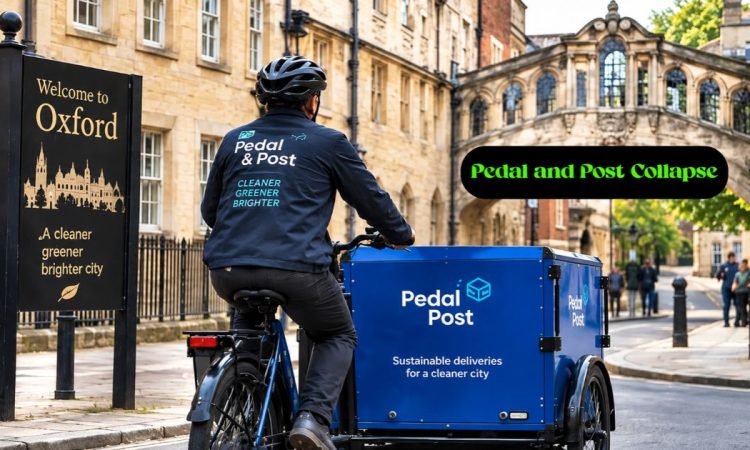

Pedal & Post, one of the UK’s best-known cargo bike couriers, has shut down after 14 years. The Pedal & Post company closure ended deliveries in both Oxford and London in early 2026 and cost around 60 people their jobs. The short answer to “what happened?” is simple. The business lost a major client, could not secure fresh funding and entered voluntary liquidation. Cargo bikes remain a big part of the UK’s low-emission delivery story, so the details matter. This article explains the causes, who was affected and what the collapse says about green delivery in the UK. It sticks to details reported by trade and local news outlets, and it flags anything still unclear.
What Was Pedal & Post?
Pedal & Post started in Oxford in 2013. It moved parcels, documents and freight using e-cargo bikes, trikes and a few electric vans. The idea was straightforward: replace diesel vans in crowded city centres with quieter, cleaner transport.
Over time, the firm built a strong reputation. It won a sustainable business award at the Oxford Climate Awards and joined Oxford’s first cargo bike trial scheme in 2022. It also delivered for national carriers such as Evri and for several Oxford University colleges.
Some of its work went well beyond parcels. Road.cc reports that the company helped halve delivery times for chemotherapy drugs for the NHS. During the Covid-19 pandemic, it also ran a local supermarket that brought groceries from Oxford businesses to residents.
Over its 14 years in Oxford, Pedal & Post delivered millions of items for residents, local businesses and national logistics firms, according to Cherwell.
In July 2025, Pedal & Post expanded into London, where it forecast more than 100,000 zero-emission deliveries a year. That expansion came only months before the end.
Here are the key dates:
- 2013: Founded in Oxford.
- 2022: Joins Oxford’s first cargo bike trial.
- Early 2025: Rival Zedify enters administration.
- July 2025: Expands into London.
- Early 2026: Loses a major client, enters liquidation and closes both sites.
What Caused the Pedal & Post Company Closure?
The company’s own announcement was short. It said it lost a major client earlier in the year and, after exploring every option, could no longer sustain the business.
Fleet News added more detail. It reported that micromobility firm Voi gave a 30-day termination notice. Chief executive Christopher Benton said the decision was not performance related. He said Voi was simply changing its operational direction.
The figures show why this hurt so badly. Benton estimated the contract made up about 25% of total revenue. Because micromobility work was highly profitable, its share of margin was higher still, at around 36%.
Without that income, the company could not keep raising funds or find a route to financial sustainability. Voluntary liquidation followed. Shareholders were told they were unlikely to get their investments back.
Pedal & Post’s public post did not name the client. Fleet News reported Voi, and student newspaper Cherwell reached a similar understanding, noting the work involved servicing e-bikes and e-scooters. Treat the client’s identity as reported, not officially confirmed by the company.
What Does Voluntary Liquidation Mean for Staff and Creditors?
Voluntary liquidation means a company’s owners decide to wind it up because it cannot continue. A licensed insolvency practitioner then takes charge. They sell assets, settle debts in a legal order and report to creditors.
Staff in this position may qualify for help. In the UK, employees whose employer is insolvent may be able to claim unpaid wages and redundancy pay through the government’s Redundancy Payments Service. GOV.UK explains who qualifies and how to apply.
Public records also help. Companies House lists filings for liquidated firms, so interested readers can follow the process directly rather than relying on rumours.
Who Was Affected by the Pedal & Post Closure?
Staff took the biggest hit. According to Zag Daily, the entire workforce of around 60 people was made redundant. That included both employed and self-employed workers.
Cherwell described the firm as an ethical employer, with riders paid the Oxford Living Wage and trained to high standards. Losing roles like these is a real blow for the people and families involved.
Customers felt it too. Evri said its e-cargo bike partner stopped trading without notice, causing temporary disruption for a small number of customers in the local area. It says schedules are now back on track.
Colleges and local businesses that relied on its consolidated deliveries had to arrange alternatives. Cherwell noted that a single cargo bike could replace several vans heading into the city centre.
When liquidation was announced, options being explored included saving jobs through contract continuity or transfer, and securing market value for assets where possible. The sources reviewed do not confirm the outcome.
Does the Closure Mean Cargo Bike Delivery Has Failed?
Not according to the people involved. Benton told Zag Daily the closure “isn’t a reflection on cargo bike use or logistics”.
The company’s statement added that the landscape looks very different from 2013. Major carriers are now investing in low-carbon, bike-based delivery, and modern cargo bikes are far better than early models.
Still, the sector has had a rough run. Zedify’s parent company, another well-known operator, went into administration at the start of 2025, with more than 100 redundancies. Reports cited low volumes and high operating costs. Zedify has since found a new home.
Two failures in about a year point to a pattern, but not necessarily to a flawed idea. Based on the reports, the pressures look commercial: dependence on large clients, low volumes and high running costs. That is an observation, not an official finding.
What the Closure Means for UK Urban Delivery
Cargo bikes still make sense in dense city centres. They can cut van traffic and move freely through clean air zones. Pedal & Post said its Oxford fleet saved around 100,000 van miles every year.
Oxford has also seen growth in publicly supported e-cargo bike schemes alongside private operators, according to Cherwell. That suggests demand for bike-based delivery has not vanished, although the market may be tougher for independent firms than the green-logistics headlines suggest.
The closure suggests the model needs steady contracts, not just good intentions. Councils, universities and carriers that want cleaner streets could offer longer commitments or shared delivery hubs so operators can plan ahead.
For households, the effect is mostly invisible. If your parcel carrier used a bike partner locally, it will now need to rely on other vehicles or another provider. Expect little change beyond who knocks on the door.
What Can Other Small Delivery Firms Learn?
Every business differs, but this story offers three practical lessons.
- Spread your risk. One contract made up roughly a quarter of revenue, and losing it proved impossible to absorb.
- Check notice periods. A 30-day termination window leaves little time to replace income.
- Communicate early. Evri said the closure came without notice, which caused local disruption.
Clients can learn too. Businesses that depend on one courier should keep a backup supplier and ask how long contract notice periods run.
Frequently Asked Questions
Why did Pedal & Post close?
It lost a major client, reported as Voi, which accounted for an estimated 25% of revenue. The company could not raise funds or find a sustainable alternative, so it entered voluntary liquidation.
When did Pedal & Post shut down?
The firm announced its closure in early 2026, after 14 years of trading. Both the Oxford and London sites closed, and reports place the voluntary liquidation in January 2026.
How many jobs were lost at Pedal & Post?
Around 60 jobs were lost across Oxford and London, according to reports. The workforce included both employed and self-employed staff, who were all made redundant.
Is cargo bike delivery still viable in the UK?
Yes, according to the company, which pointed to major carriers investing in bike-based delivery. However, recent failures suggest operators benefit from diverse clients and steady contracts.
Can staff claim redundancy pay after a company liquidation?
It depends on eligibility. Employees of an insolvent employer may be able to claim redundancy pay and unpaid wages through the government’s Redundancy Payments Service. Check GOV.UK for eligibility rules.
Conclusion
The Pedal & Post company closure is a sad moment for UK green logistics. A well-regarded Oxford courier lost roughly a quarter of its revenue in one contract decision and could not recover. About 60 jobs, local customers and delivery partners felt the impact. Yet the company insists cargo bikes still have a future, and that case remains strong in congested city centres. Whether that future arrives depends on steadier contracts, wider client bases and support from those who want cleaner streets. The wheels may have stopped for one pioneer, but the idea has not.
for more information click here