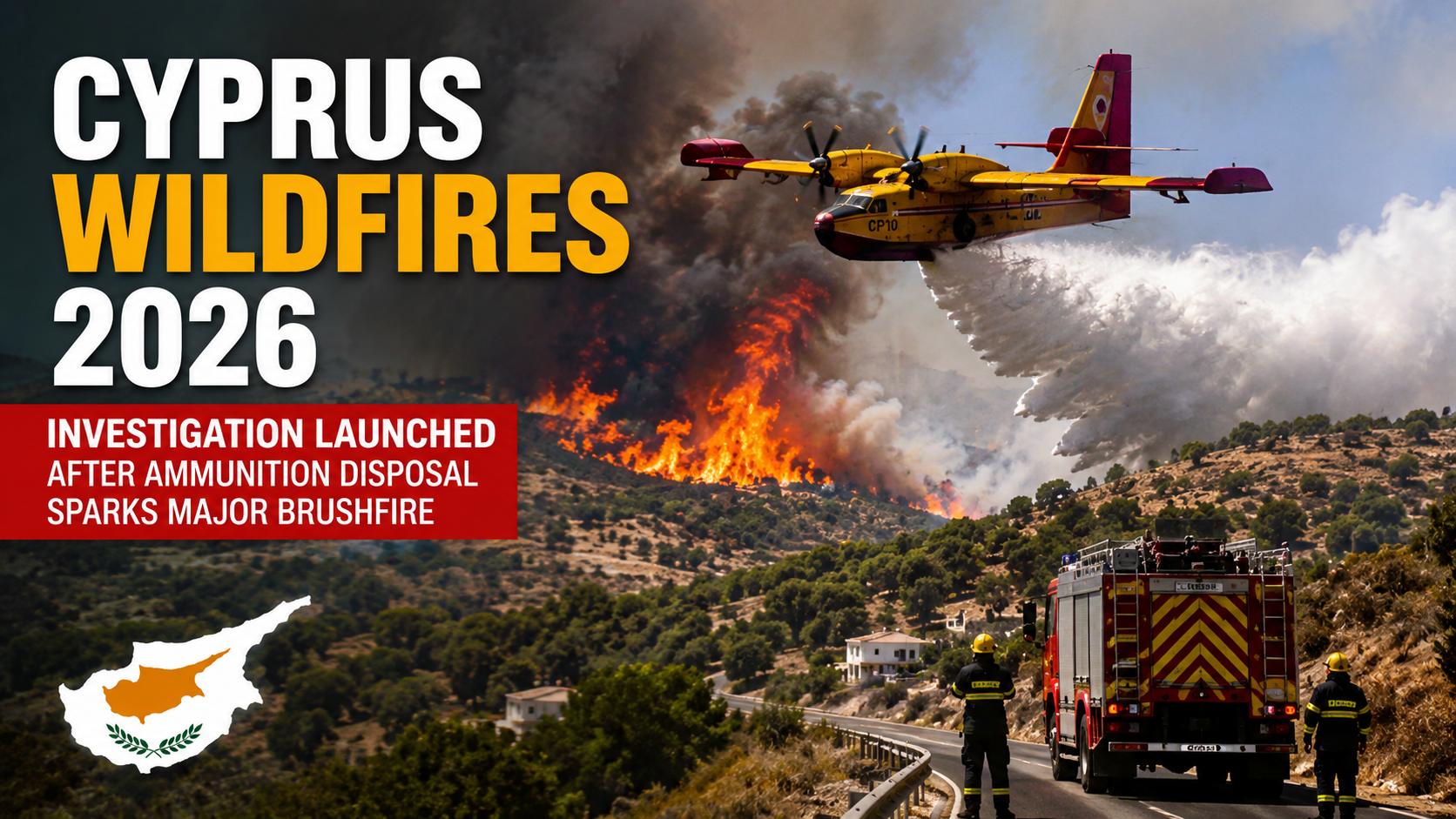

Cyprus is once again confronting the growing threat of summer wildfires after a major brushfire broke out in late July 2026, prompting evacuations, a large emergency response, and a government investigation.
The fire began near the Kalo Chorio firing range after National Guard engineers detonated discarded rocket
propelled grenade projectiles during extreme summer heat. Authorities say the operation took place despite long-standing restrictions against such activities during the high-risk wildfire season. The incident quickly developed into a fast-moving brushfire that scorched around 120 hectares (300 acres) of vegetation and forced the precautionary evacuation of two nearby communities.
The event has renewed debate over wildfire preparedness, military safety procedures, and the increasing environmental risks facing Cyprus during prolonged periods of extreme heat.
Fire Erupts During Extreme Weather
According to officials, the ammunition disposal operation occurred while temperatures were close to 40°C (104°F). Under these conditions, even a small ignition source can rapidly spread through dry vegetation.
After the explosion, flames quickly expanded across nearby brushland, requiring an immediate response from emergency services. Strong firefighting efforts prevented the blaze from reaching residential areas, although authorities ordered precautionary evacuations in communities close to the fire front.
Massive Firefighting Response
Cyprus mobilised significant resources to contain the wildfire.
Emergency operations included:
- Around 100 firefighters
- Eight firefighting aircraft
- Ground firefighting units
- Civil Defence support
The coordinated response successfully brought the fire under control before it caused widespread structural damage. Officials reported that no homes were destroyed during this incident.
Government Orders Immediate Investigation
The wildfire prompted a swift reaction from Cyprus Defence Minister Vassilis Palmas, who announced a formal investigation into why ammunition was destroyed during the peak wildfire season despite existing safety protocols.
Officials are examining:
- Whether operational regulations were ignored
- Why the demolition proceeded during extreme temperatures
- Whether command approval procedures were followed
- Possible disciplinary measures if violations are confirmed
The minister stated that accountability would follow if the investigation finds established procedures were breached.
Why Cyprus Faces Increasing Wildfire Risk
Cyprus experiences hot, dry Mediterranean summers every year, but climate conditions have become increasingly severe.
Several factors contribute to today’s elevated wildfire danger:
- Extended drought conditions
- Reduced winter rainfall
- Heatwaves exceeding 40°C
- Dry forests and grasslands
- Strong seasonal winds
These conditions allow fires to spread rapidly once ignition occurs.
Experts warn that climate change is increasing both the frequency and intensity of wildfire seasons across southern Europe.
Lessons from Previous Wildfires
The latest incident follows devastating wildfire seasons in recent years.
The deadly Limassol wildfire in 2025 resulted in fatalities, destroyed homes, and required international firefighting assistance. That disaster highlighted the importance of early detection, rapid emergency response, and strict prevention measures.
Although the 2026 brushfire caused significantly less destruction, it demonstrates how quickly fires can develop under extreme weather conditions.
Impact on Local Communities
Even where homes escape direct damage, wildfires affect nearby communities in several ways:
- Temporary evacuations
- Road closures
- Smoke pollution
- Damage to wildlife habitats
- Agricultural losses
- Increased stress for residents
Authorities urged people living near the affected area to follow evacuation instructions and avoid unnecessary travel while firefighting operations continued.
Environmental Concerns
The destruction of approximately 120 hectares of vegetation represents another setback for Cyprus’ natural environment.
Wildfires can lead to:
- Loss of native plants
- Habitat destruction
- Soil erosion
- Reduced biodiversity
- Increased flood risks during winter rains
Environmental organisations continue to call for stronger wildfire prevention strategies and improved land management.
Regional Cooperation
Cyprus has strengthened its firefighting capabilities in recent years.
The European Union has also expanded regional wildfire preparedness, including establishing a new regional firefighting station in Cyprus to improve rapid response across the eastern Mediterranean during severe wildfire seasons.
Safety Advice During Wildfire Season
Authorities remind residents and visitors to:
- Avoid lighting fires outdoors.
- Never discard cigarettes into dry vegetation.
- Follow evacuation orders immediately.
- Monitor official emergency updates.
- Report smoke or fire as soon as possible.
- Avoid entering closed forest areas.
Early reporting remains one of the most effective ways to prevent small fires from becoming major disasters.
Final Thoughts
The July 2026 Cyprus brushfire serves as another reminder of how vulnerable Mediterranean countries remain during extreme summer conditions. Although firefighters successfully contained the blaze before homes were lost, the incident has raised important questions about operational safety and wildfire prevention.
The government’s investigation will determine whether established military procedures were ignored and what changes may be needed to reduce future risks. At the same time, the fire highlights the broader challenge Cyprus faces as hotter temperatures and drier landscapes continue to increase the likelihood of destructive wildfires.
for more information click here