
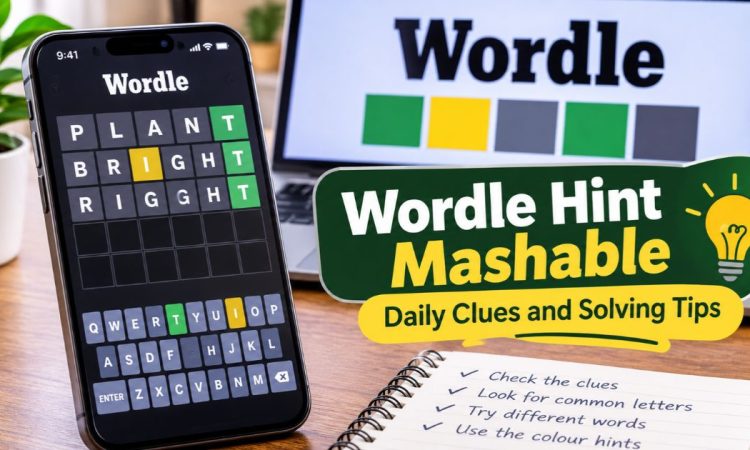

Stuck on today’s grid with one guess left? Plenty of players are. Many search for a Wordle hint Mashable publishes each day before they risk their streak. Mashable’s daily write-up offers hints, tips and the answer, so you choose how much help to take. This guide explains how those hints work and how to use them without spoiling the fun. It also covers UK quirks such as timing and spelling, plus habits that reduce how often you need help at all. Whether you play over breakfast or on the commute, you will find something useful here, whatever your skill level.
What is a Wordle hint from Mashable?
Wordle is a daily word game owned by The New York Times. You have six guesses to find one five-letter word. A green tile means the right letter in the right place. Yellow means the letter appears elsewhere in the word. Grey means it is not there at all.
Mashable covers the game every day. Each article carries the date and the puzzle number, then offers a few hints and clues before it reveals the answer. That layered approach is the whole point. You read one nudge, return to your grid, and carry on only if you are still stuck.
A hint and an answer are not the same thing. A hint narrows your options. The answer ends the puzzle. Keep them separate in your mind and the game stays enjoyable, even on a bad day.
How to use a Wordle hint from Mashable without spoilers
The biggest risk is scrolling too far. The answer comes after the hints, so scroll slowly. Try this simple routine:
- Play your first two guesses without help, so you have a real board to work from.
- Open the Mashable article and read only the first hint.
- Return to your grid and test one new guess.
- Still stuck? Read the next hint, then try again.
- Check the answer only after your final guess, or when you decide to stop.
This slow approach keeps the satisfying “aha” moment intact. It also teaches you what each type of clue is worth.
What kinds of Wordle hints should you expect?
Hints in daily Wordle guides tend to fall into a few familiar groups. The exact wording changes from day to day, but the patterns are easy to spot.
- Letter clues: the first letter, or how many vowels appear.
- Structure clues: whether any letter repeats.
- Meaning clues: a short definition, or the type of word.
- Related words: a synonym or a theme that points towards the answer.
Start with letter and structure clues. They shrink your list of possible words fastest. Save meaning clues for later, because they come close to giving the word away.
A worked example of hint led solving
Here is a made-up board to show the method. Imagine your first guess gives a green A in the second position and a yellow R.
You reach guess three and nothing fits. Now read one hint: the word has no repeated letters. That removes options such as words with double consonants, and your list shrinks at once.
Next, test a word with fresh consonants. The tiles that come back tell you more than a blind guess would. A second hint, perhaps about the meaning, may then finish the job.
Notice what happened. You still did the thinking. The hint simply removed dead ends.
Wordle hint Mashable posts: three things UK players should know
Check the puzzle number. Mashable is a US based site, so its dates may not line up with yours late at night. The puzzle number is the safest match. Check that the puzzle number matches today’s game before you trust any hint.
Know when the puzzle resets. Wordle resets at midnight local time, so UK players get the new word at midnight UK time. Avoid hints published for a different day.
Watch for American spelling. Wordle’s answers generally follow it, so think “honor” and “odor” rather than “honour” and “odour”. This catches out many British players.
Smarter starting words and habits that cut your need for hints
A strong opening makes every later hint more useful. Many players favour words rich in common letters, such as CRANE, SLATE or AUDIO. No single word is perfect, so choose one you like and stick with it.
Your second guess matters just as much. Use it to test fresh letters rather than repeat ones you already know are wrong. This is how you gather information quickly.
After the game, try WordleBot, the New York Times analysis tool. It reviews your guesses and suggests stronger alternatives. Over time, that feedback can sharpen your instincts.
Common mistakes that waste guesses
Even experienced players fall into the same traps. Here are the four most common.
- Reusing grey letters. Check your keyboard before every guess.
- Chasing one pattern. Words ending in IGHT, such as LIGHT, MIGHT and RIGHT, can eat all six guesses. A throwaway word that tests several first letters is smarter.
- Forgetting double letters. Words like ABBEY or SPEED are easy to miss.
- Playing tired. A late-night guess is often a careless one.
Fixing these habits can save you guesses and reduce how often you reach for a hint.
Should you play Hard Mode when using hints?
Hard Mode is an optional setting in Wordle. Once a letter turns green or yellow, every later guess must use it. This stops you from throwing away guesses on exploration.
That rule changes how you use hints. In Hard Mode you cannot freely play a throwaway word to test new letters, so a letter or structure clue becomes more valuable. Normal mode gives you more freedom.
Beginners should usually stay in normal mode. Switch on Hard Mode once your streak feels comfortable.
Other ways to get unstuck without a full answer
Sometimes a hint is more than you need. Try these gentler options first.
- Say the letters aloud and listen for familiar sounds.
- Write the alphabet and cross off letters you have used.
- Shuffle your yellow letters into new positions.
- Walk away for ten minutes. A fresh look often helps.
- Ask a friend for a single letter, not the word.
These tricks cost nothing and keep the puzzle yours. If none work, a staged hint is the next sensible step.
How to spot a trustworthy hint page
Searching for hints brings up plenty of pages, and quality varies a lot. Some copy older articles, and some carry placeholder text instead of real answers. A wrong hint wastes your time and your guesses.
Look for these signs:
- A clear date and puzzle number at the top
- A named publisher with a real editorial team
- Hints that arrive in stages, before the answer
- No pop-ups, fake download buttons or pressure to subscribe
If a page looks suspicious, close it. Go directly to the publisher’s own website instead of following a random link.
Is using a Wordle hint cheating?
No. Wordle is a casual solo game with no prize and no official penalty for asking for help. Your streak belongs to you, so you set the rules.
Some players allow one hint per game. Others permit hints only to save a streak. A few ban them completely. Pick a rule that keeps the game fun and stick to it.
Playing with family? Agree the rule together. A shared hint can turn a solo puzzle into a pleasant chat over the kitchen table.
Frequently Asked Questions
What is a Wordle hint from Mashable?
It is a clue in Mashable’s daily Wordle article that nudges you towards the answer, such as a letter or meaning clue, without revealing the word straight away.
Does Mashable reveal the Wordle answer?
Yes. Its daily article gives hints first, then the full answer afterwards. Scroll carefully if you want to avoid spoilers, and stop reading once you have enough help.
When does the new Wordle puzzle appear in the UK?
Wordle resets at midnight local time, so UK players see the new puzzle at midnight UK time. Check the puzzle number when reading hints from US sites.
How can I avoid Wordle spoilers?
Read hints one at a time and stop as soon as you feel unstuck. Scroll slowly, and close the page before you reach the answer.
Conclusion
A Wordle hint Mashable publishes each day can rescue a streak without ruining the puzzle, provided you use it in stages. Read one clue, test one guess, and stop when you feel unstuck. Match the puzzle number, mind American spellings and avoid pages that look untrustworthy. Over time, strong starting words and sharper habits will cut your need for help. Use hints as a friendly guide, not a crutch, and the daily grid stays a small pleasure worth returning to. Keep it simple, keep it fair, and enjoy the challenge.
for more information click here