
For gardeners, spending time outdoors is one of the most rewarding parts of summer. However, during the peak allergy season, checking the pollen count in London before heading into the garden has become just as important as checking the weather forecast.
The latest forecasts indicate that London and South East England are experiencing very high weed pollen levels, with warm, dry weather helping pollen remain airborne for longer periods. These conditions can trigger hay fever symptoms and make outdoor gardening uncomfortable for people who are sensitive to pollen.
Whether you grow flowers, vegetables, shrubs, or simply enjoy maintaining your garden, understanding today’s pollen outlook can help you plan your activities more effectively.
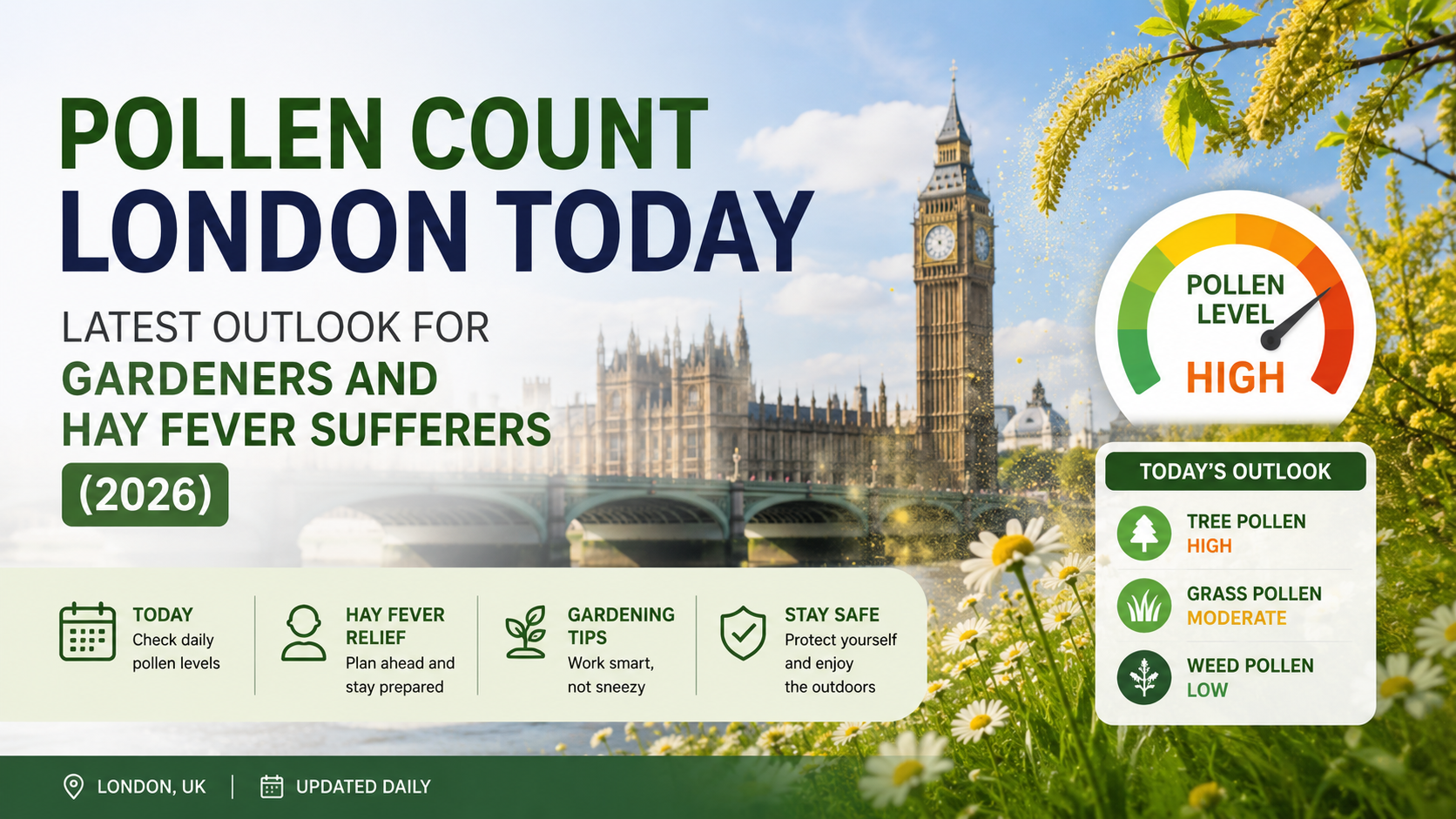
Today’s Pollen Outlook for London
According to the latest Met Office forecast, London is expected to experience very high weed pollen, while grass pollen remains present in some areas. Warm temperatures, sunshine, and relatively dry weather are creating ideal conditions for pollen to spread throughout the day.
For gardeners, this means:
- High risk of hay fever symptoms
- Increased airborne pollen during the afternoon
- Dry plants releasing more pollen
- Outdoor work becoming less comfortable for allergy sufferers
Although pollen levels can vary between neighbourhoods depending on vegetation and local weather conditions, much of Greater London is expected to remain in the highest risk category.
Why Is London’s Pollen Count So High?
Several weather conditions influence airborne pollen levels.
Warm Temperatures
Heat encourages grasses and weeds to release pollen more rapidly.
Dry Weather
Rain normally helps wash pollen from the air. During dry periods, pollen remains suspended for much longer.
Light Winds
Gentle breezes carry pollen across parks, gardens, roads, and residential neighbourhoods.
Seasonal Weed Pollination
As summer progresses, weed pollen becomes increasingly dominant across southern England after the peak grass pollen season.
Which Types of Pollen Are Affecting London?
Different plants release pollen at different times of the year.
Weed Pollen
Current forecasts show weed pollen is now the primary allergen affecting London.
Common sources include:
- Nettle
- Mugwort
- Plantain
- Dock
- Goosefoot
These weeds grow widely across roadsides, parks, open fields, and neglected gardens.
Grass Pollen
Although grass pollen season is gradually easing, it still contributes to allergy symptoms in parts of southern England.
Large lawns, meadows, sports fields, and roadside grass continue releasing pollen during warm weather.
What Does This Mean for Gardeners?
Gardening during periods of very high pollen counts requires a little extra planning.
Tasks such as:
- Lawn mowing
- Hedge trimming
- Pulling weeds
- Digging dry soil
- Pruning shrubs
can disturb pollen and increase exposure.
If possible, schedule these activities for times when pollen levels are naturally lower.
Best Times to Garden
Gardeners who suffer from hay fever should avoid working outdoors during the afternoon, when pollen levels are generally at their highest.
Better times include:
- Early morning after dew
- Evening before sunset
- Shortly after rainfall
Rain temporarily removes pollen from the air, making gardening much more comfortable.
Common Hay Fever Symptoms
Very high pollen counts may cause:
- Sneezing
- Runny nose
- Nasal congestion
- Itchy eyes
- Watery eyes
- Sore throat
- Headaches
- Fatigue
People with asthma may also notice worsening breathing symptoms during periods of elevated pollen.
Gardening Tips During High Pollen Days
If today’s pollen count in London is high, gardeners don’t necessarily need to avoid outdoor work altogether. Instead, making a few simple adjustments can significantly reduce pollen exposure while allowing you to continue enjoying your garden.
1. Garden Early or Late
Pollen levels are generally lower during the early morning and in the evening. Avoid gardening during the middle of the day, when warm temperatures and sunshine cause pollen to circulate more heavily.
2. Wear Protective Clothing
Long-sleeved clothing, gardening gloves, sunglasses, and a well-fitted face mask can help reduce contact with airborne pollen.
3. Keep Your Lawn Short
Regular mowing before grass flowers can reduce future pollen production. If mowing triggers allergy symptoms, consider asking someone else to mow or wear suitable protective equipment.
4. Remove Weeds Promptly
Weeds such as nettle, mugwort, plantain, and dock release large amounts of pollen during late summer. Removing them before they flower can help reduce pollen around your garden.
5. Wash After Gardening
After finishing outdoor work:
- Wash your hands and face.
- Shower if possible.
- Change into clean clothes.
- Avoid sitting on furniture while wearing pollen-covered clothing.
These simple habits prevent pollen from spreading inside your home.
Creating an Allergy-Friendly Garden
If you regularly experience hay fever, you can make your garden more comfortable by choosing plants that produce less airborne pollen.
Good options include:
- Roses
- Begonias
- Hydrangeas
- Camellias
- Petunias
- Geraniums
These plants rely mainly on insects for pollination rather than releasing large amounts of pollen into the air.
Try to limit highly allergenic plants close to seating areas, patios, and windows.
How Weather Affects London’s Pollen Count
Weather plays a major role in determining daily pollen levels.
Sunny Weather
Warm sunshine encourages plants to release pollen quickly, often resulting in higher afternoon pollen counts.
Rain
Rain helps remove pollen from the air, often providing temporary relief for allergy sufferers.
Wind
Light winds can carry pollen over long distances, while stronger winds may spread it even further across parks and residential areas.
Humidity
Higher humidity can reduce airborne pollen for short periods, while dry air generally allows pollen to remain suspended for longer.
Hay Fever Prevention Tips
If you suffer from seasonal allergies, consider these practical steps:
- Check the daily pollen forecast before going outside.
- Keep windows closed during peak pollen hours.
- Wear sunglasses outdoors to protect your eyes.
- Avoid drying clothes outside on high pollen days.
- Vacuum your home regularly using a HEPA-filter vacuum.
- Wash bedding frequently.
- Keep pets clean if they spend time outdoors.
If symptoms become severe or persistent, consult a healthcare professional for advice on appropriate allergy treatments.
Frequently Asked Questions
What is today’s pollen count in London?
According to the latest available forecast, London is experiencing very high weed pollen levels, with grass pollen still present in some areas of southern England.
Who is most affected by high pollen?
People with hay fever, asthma, seasonal allergies, and other respiratory conditions are generally the most affected.
When is pollen highest during the day?
Pollen levels are often highest from late morning through the afternoon, especially during warm, dry weather.
Is it safe to garden during high pollen levels?
Yes, but taking precautions such as gardening early in the day, wearing protective clothing, and washing afterwards can help reduce exposure.
Final Thoughts
Today’s high pollen levels in London are a reminder that weather conditions can have a significant impact on outdoor activities, especially for gardeners and people with seasonal allergies. By checking the daily pollen forecast and adjusting gardening routines accordingly, you can continue caring for your garden while reducing the discomfort caused by airborne pollen.
Simple measures such as choosing the right time to work outdoors, removing weeds before they flower, and wearing protective clothing can make a noticeable difference throughout the allergy season.
for more information click here